
Investing in real estate has always been considered one of the safest and most rewarding wealth-building strategies. Whether you are a first-time investor or someone looking to expand your Portfolio, having a clear and well-planned investment strategy is essential. Real estate not only provides long-term capital growth but also ensures stable rental income and financial security.
In this blog, you’ll learn the most powerful real estate investment strategies, how they work, and how you can choose the right one depending on your goals, budget, and risk appetite.
1. Why Real Estate is a Powerful Investment
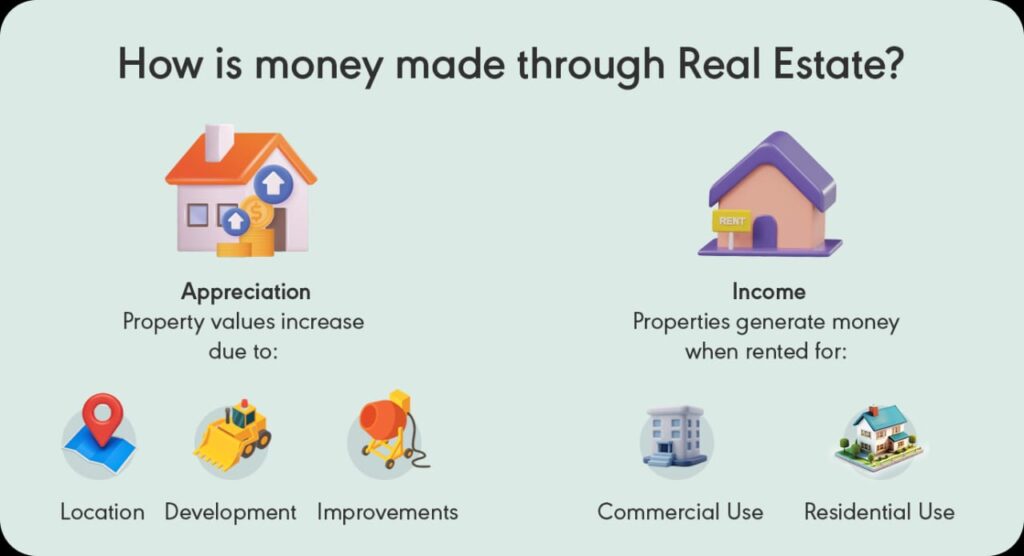
Before jumping into strategies, it’s important to know why real estate attracts millions of investors globally.
✔️ Stable & predictable income
Rental properties can provide monthly cash flow, which is more stable than stock market returns.
✔️ Appreciation in property value
Over the years, real estate tends to increase in value, especially in developing locations or growing cities.
✔️ Leverage advantage
You can buy property with a small down payment and finance the rest through home loans – something not possible in most other investments.
✔️ Inflation hedge
As prices rise, property value and rental income also rise, protecting your money from inflation.
✔️ Tax benefits
Investors get deductions on loan interest, and expenses, lowering their overall tax burden.
2. Types of Real Estate Investments
Different investment types give different returns. Understanding them helps you choose the best strategy.
- Residential Real Estate
Include plots, apartments, villas,independent houses.
Suitable for first-time investors because it is easy to rent and resell.
- Commercial Real Estate
Includes office, retailshops,showrooms and industrial properties. Higher rental returns but also higher investment cost.
- Land Investments
Includes residential plots or agricultural land. High appreciation potential but lower monthly income (unless leased out)
- REITs (Real Estate Investment Trusts)
A low-cost way to invest in commercial real estate without buying property. Good for passive investors who want liquidity.
3. Top Real Estate Investment Strategies
Here are the best strategies that successful investors use:
Strategy 1: Buy and Hold (Long-term Investment)
This is the most popular and safest strategy. You buy a property and hold it for several years while it appreciates in value.
How it works:
- Buy property in a developing or high-demand location
- Rent it out for monthly income
- Hold it for 5-15 years
- Sell it when the value appreciates significantly
Best for:
- Salaried individuals
- Long-term investors
- People seeking passive income
Benefits:
- Steady rental income
- Low risk
- Excellent long-term returns
Example:
Buying a plot near a rapidly growing area like a new expressway, metro station, SEZ or commercial hub.
Strategy 2: Rental Income Strategy
This strategy focuses specifically on building a rental portfolio.
Options include:
- Residential apartments
- Student housing or coliving
- Commercial shops
- Corporate office leases
Why it’s powerful:
Rental income gives consistent cash flow that grows with time.
Commercial property often gives 6-12% rental yield, much higher than residential properties.
Ideal for:
Investors looking for monthly returns and passive income.
Strategy 3: Fix and Flip (Buy-Renovate-Sell)
Very popular in countries like the US, and increasingly in India.
How it works:
- Buy an undervalued or old property at a low price
- Renovate it economically
- Sell it at a higher price
Benefits:
- Quick profits
- Short-term investment cycle
Risks:
- Renovation delays
- Market fluctutions
- Requires experience in pricing and construction
Strategy 4: Pre-launch or Under-construction Investment
Builders often offer lower prices during pre-launch or early construction.
How it works:
- Buy at the initial stage (lowest price)
- Hold until the project nears completion
- Sell at a much higher price
Benefits:
- High capital appreciation
- Low initial investment
Risks:
- Construction delays
- Developer credibility issue
Tip:
Always invest in RERA-approved and reputed developers to reduce risk.
Strategy 5: Location-based Appreciation Strategy
“Location is everything” in real estate.
You buy a property solely based on future development prospects like:
- New highways or expressways
- Industrial Zones
- IT parks
- Metro connectivity
- Airports
Why it works:
Infrastructure drives massive price appreciation.
Example:
Areas near Mahindra SEZ in Jaipur saw rapid appreciation when the SEZ became operational.
Strategy 6: Portfolio Diversification
Smart investors never rely on just one type of real estate.
Ideal mix:
- One residential property for rental
- One land parcel for apperciation
- One commercial property or REIT for stable high returns
Benefits:
- Balanced risk
- Higher overall returns
- Protection from market fluctuations
4. How to choose the Right Strategy
Choosing the best real estate strategy depends on:
✔️ Your Budget
Plots and apartments are good for moderate budgets, while commercial property is for higher budgets.
✔️ Investment Duration
- Short-term:- Flip, pre-launch
- Long-term:- Buy & hold, land investment
✔️ Risk Appetite
- Low risk:- Residential, REITs
- Moderate risk:- Land
- High risk:- Fix & Flip
✔️ Your Knowledge Level
Beginners should start with simpler strategies like buy-and-hold or residential rentals.
5. Common Mistakes to Avoid
Many investors lose money because they rush into decisions. Avoid these mistakes.
❌ Ignoring location and future development
Always research upcoming government projects and growth zones.
❌ Not checking legal documents
Ensure RERA approval, clear title and proper registration.
❌ Overestimating rental income
Research actual market rental rates before buying.
❌ Emotional buying
Always buy based on return on investment- not emotions.
❌ No exit strategy
Know when you will sell and at what expected profit.
6. Final Advice: Build Wealth Slowly and Smartly
Real estate is not a “quick money” investment-its a slow, steady, and powerful wealth-building tool. With the right strategy, even a small investment can grow into a massive portfolio over time.
Whether you start with a small plot, a flat or even a REIT, the key is to start investing early, understand your strategy, and stay consistent.